The expert seminar was designed for anyone who wants to learn how to work with data in the age of artificial intelligence.
The expert seminar Process Data Quickly and Efficiently took place on March 10, 2026, in the congress facilities of the National Football Stadium in Bratislava, attracting almost 100 participants from various companies and academic institutions. The event was aimed at professionals, managers, and IT specialists looking to navigate the possibilities of working with data in the era of artificial intelligence.
The presentations during the seminar gave participants a more detailed look at how the SPICE project works, describing the roles of partners and work package implementers, as well as the goals of the research and development activities on which the SPICE partners collaborate.
The seminar was opened by Peter Klamo from the Slovak Centre for Digital Innovation, who welcomed participants and introduced them to the context of the event. In his opening remarks, he emphasized the growing importance of efficient data processing for businesses and institutions, and presented the framework within which the SPICE project’s research and development activities operate.
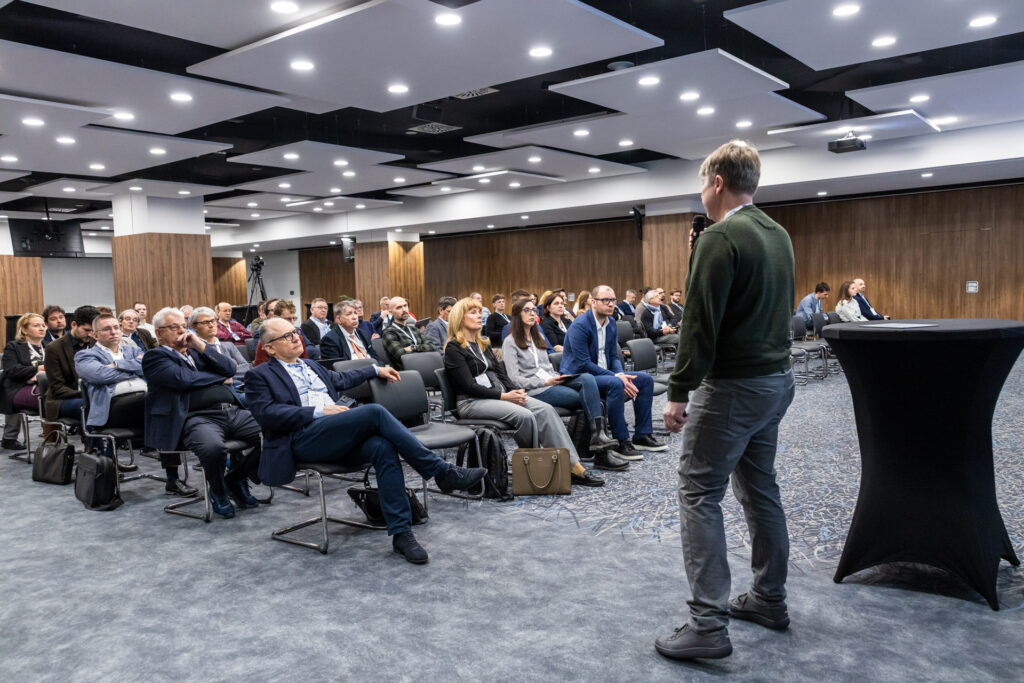
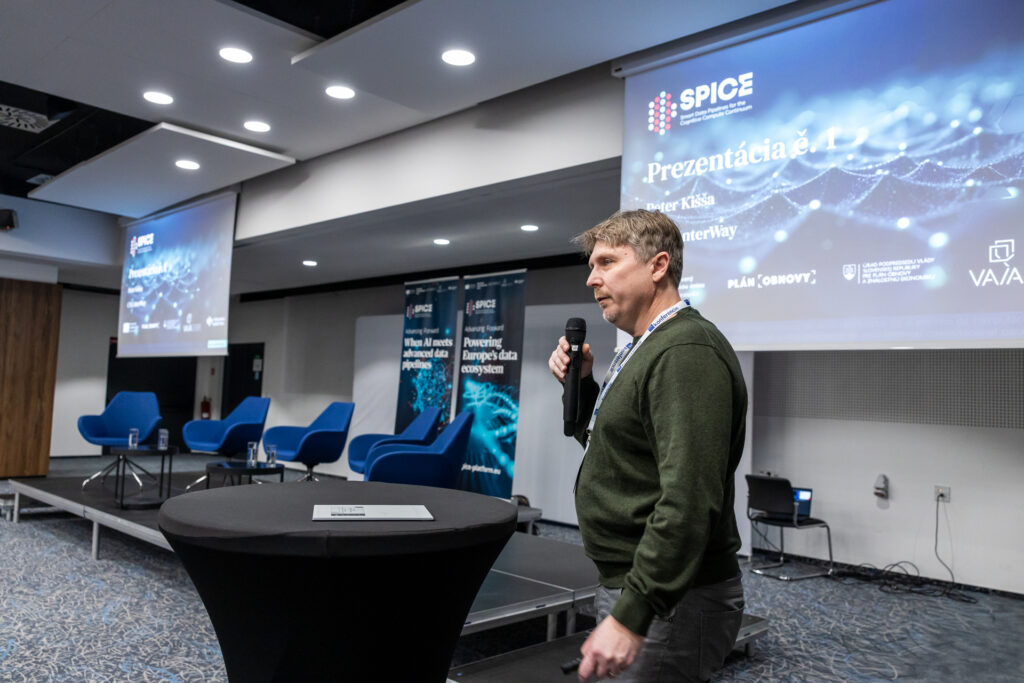
Peter Kišša, CTO of InterWay, opened the expert session with a comprehensive overview of the SPICE project. He explained the reasons behind its creation, described the concept, its main pillars and expected outcomes, and clarified which organizations and sectors the project is intended for. He also presented the methodology for developing individual work packages and outlined the involvement of partners and their specific roles.
Key topics of the presentation:
- Why the SPICE project was created – description of the concept, goals, and main pillars
- Work packages and the involvement of individual partners
- Approaches to processing large volumes of data and security in their aggregation
- How companies and institutions can prepare for the deployment of a platform emerging from the research
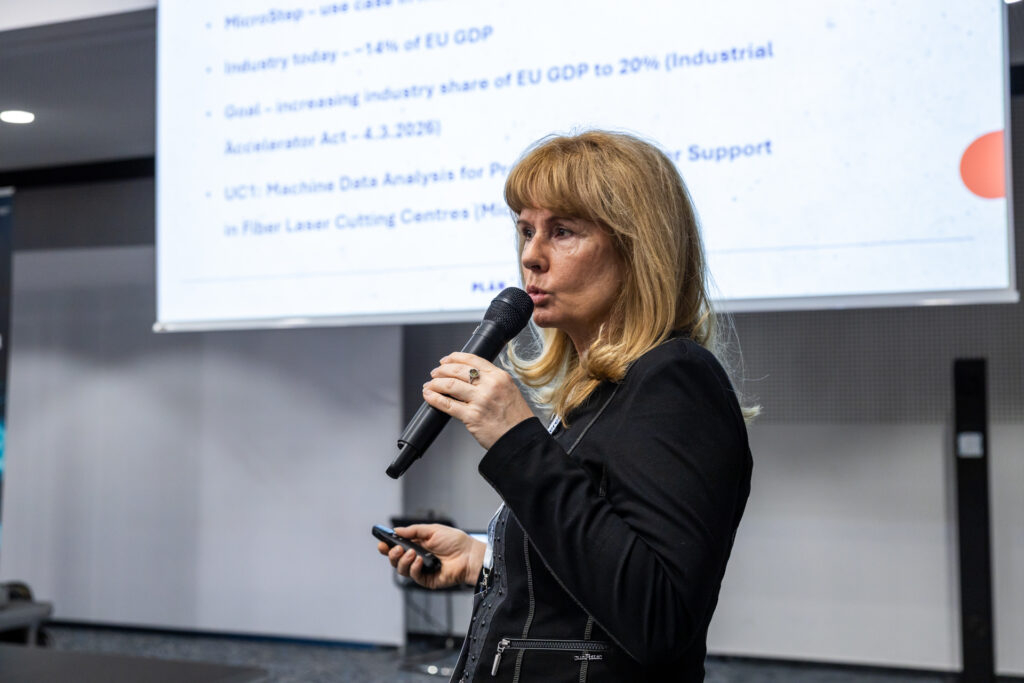
Eva Stejskalová, managing director of the Slovak company MicroStep, introduced the company as a provider of automated solutions in the areas of loading, unloading, handling, and sorting of parts. The focus of her presentation was the analysis of machine data from fiber laser cutting centers and the possibilities of using it for proactive customer support.
Key topics of the presentation:
- MicroStep’s use case in the SPICE project – the manufacturing industry
- Machine data analysis for proactive customer support
- Computer-assisted parameter tuning
- Development of the Maintenance-as-a-Service concept
- Prediction of consumable material usage
- Proactive delivery of technical support to customers
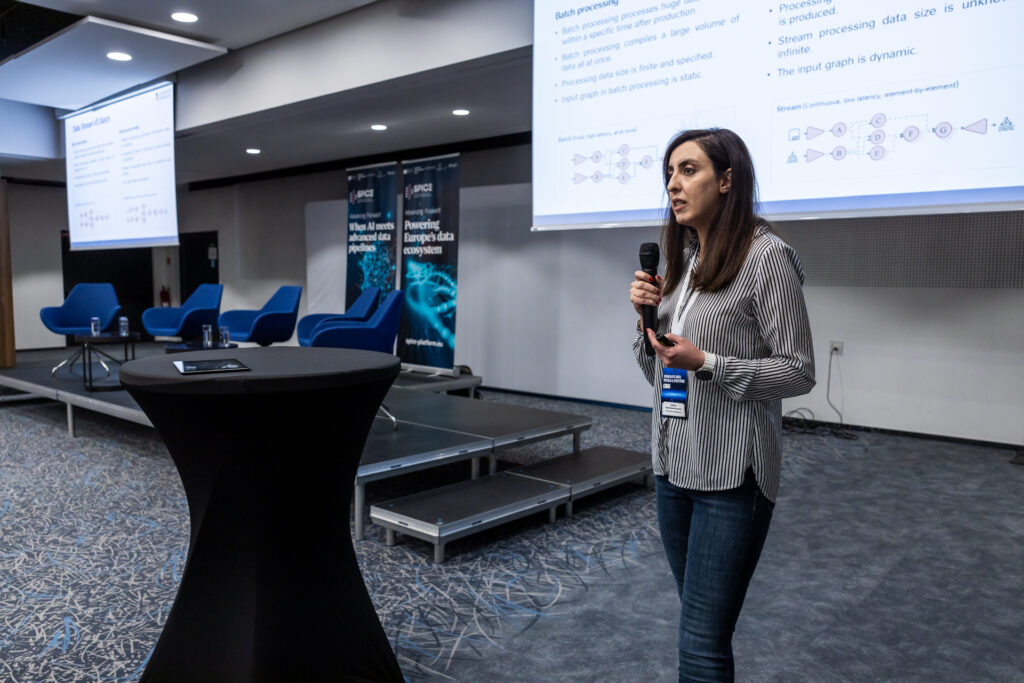
Zahra Najafabadi-Samani, a research assistant from the University of Innsbruck, addressed the issue of distributed data processing in the context of growing data loads. She noted that global data volumes could exceed 180 zettabytes by the middle of this decade, with a significant share being generated at the network edge. This reality places new demands on processing architectures and the orchestration of data flows.
Key topics of the presentation:
- Orchestration of distributed data flows across the computing continuum
- The data explosion and its implications for edge networks
- The computing continuum and the limitations of cloud-based solutions
- Data Stream vs. Batch – a comparison of data processing approaches
- Current trends in the field of data flows
- Orchestration of data flows across the edge-cloud continuum
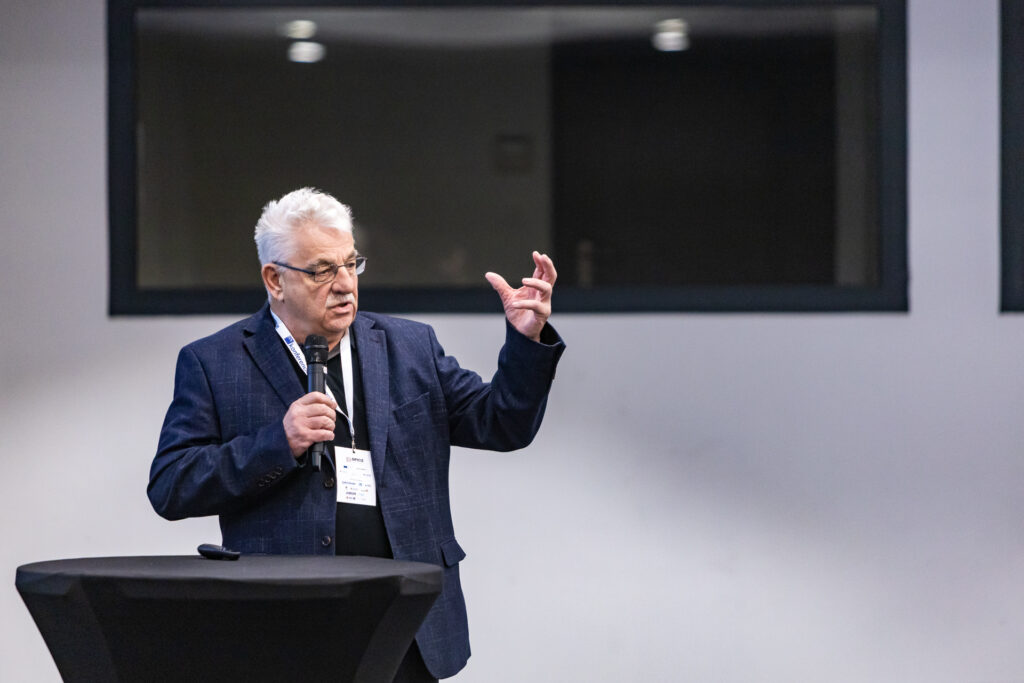
Doc. Ing. Ladislav Hluchý, CSc. from the Institute of Informatics of the Slovak Academy of Sciences focused on the use of artificial intelligence methods in the design and management of data flows. He outlined the challenges in data flow engineering and presented AI-based approaches to the autonomous adaptation of platforms, including specific applications in the energy sector and smart grid management.
Key topics of the presentation:
- Using artificial intelligence for intelligent data flow composition
- Challenges in data flow engineering
- Reasoning about the computing continuum
- AI-based methods for autonomous platform adaptation
- High-level data flow architecture
- Risk prediction in transmission networks
- Analysis of control and information system data and integration of human expertise
- Smart grid management
- Prototype development and integration roadmap, implementation strategy
- Description of data exploration and extraction
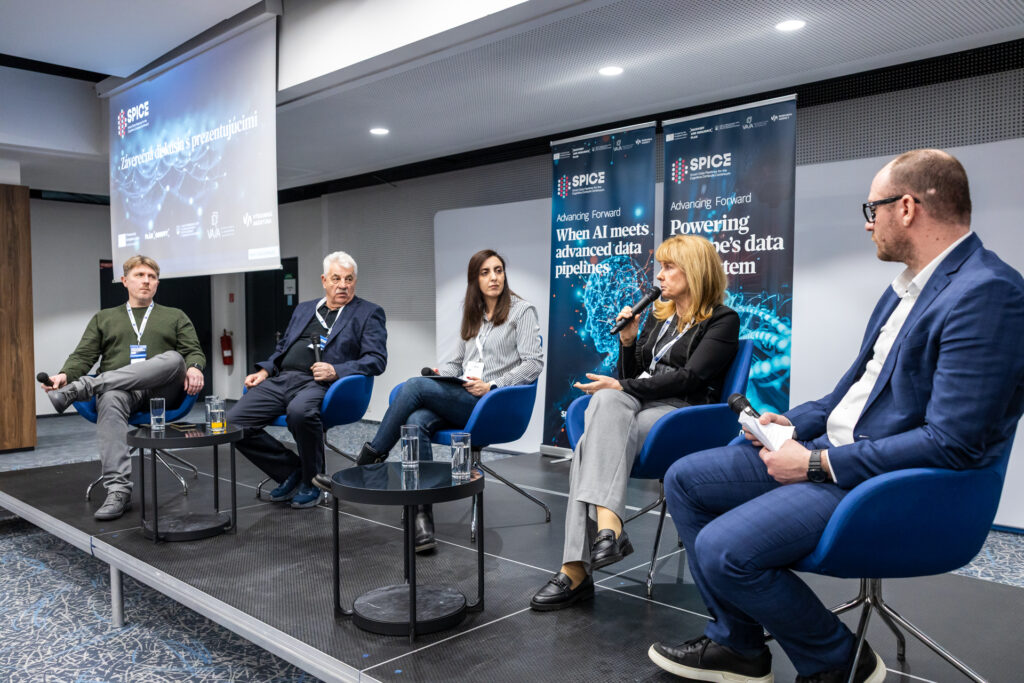
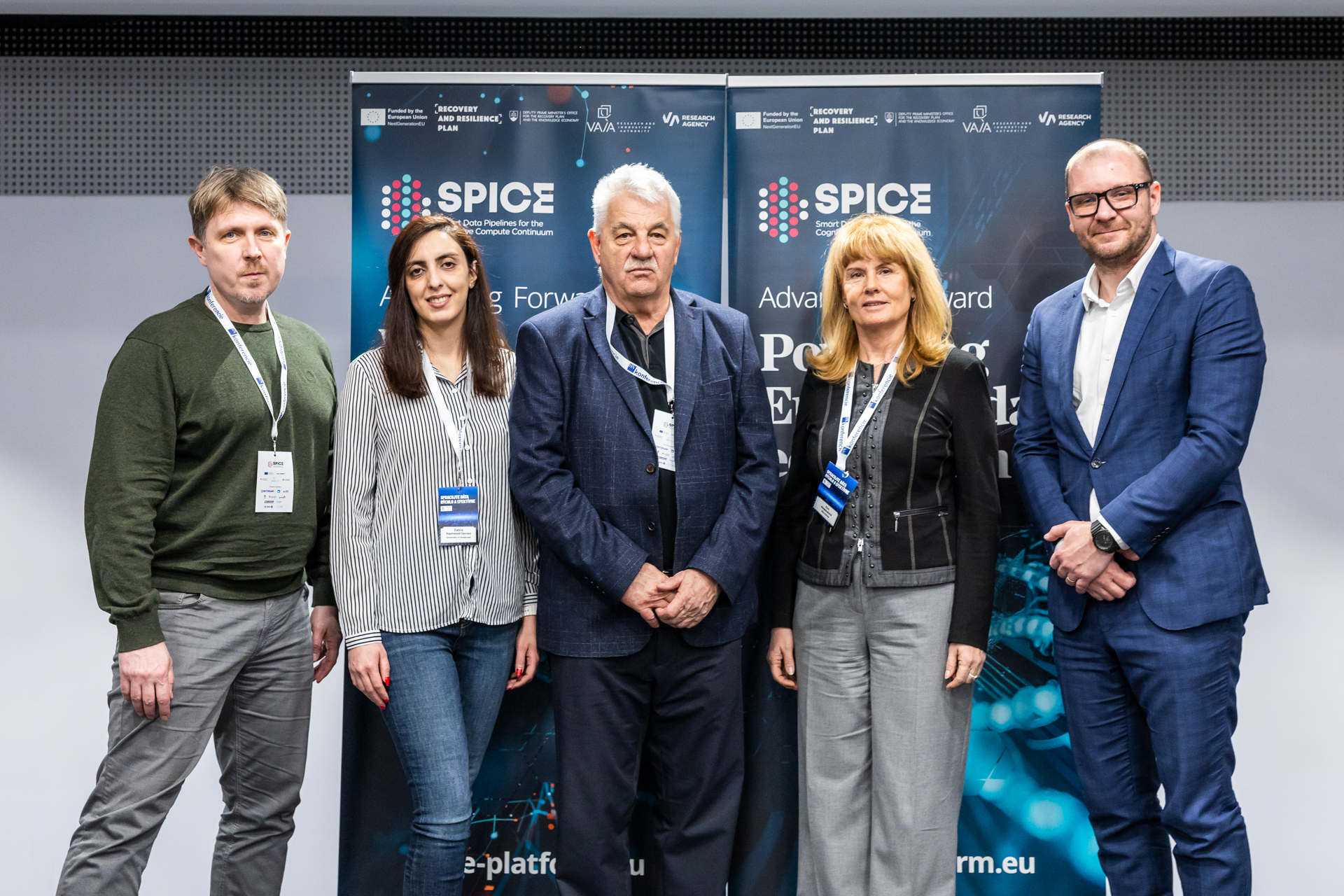
The seminar culminated in a panel discussion involving all four presenters – Eva Stejskalová, Zahra Najafabadi-Samani, Peter Kišša, and Ladislav Hluchý. The discussion was moderated by Juraj Kadáš from the Slovak Centre for Digital Innovations. Participants had the opportunity to pose questions directly to the experts and deepen their understanding of the presented topics in an interactive format.